
An interview with Lyn Griffin: Kennel Maid (1970-71)
“It's quite nice to remember some of this stuff because I'd forgotten about it really. Because I mean you do over the years. I mean after I worked for Mrs Craufurd I worked for, you know, umpteen other people and lived in various different places. And so you know this was just the start of my career with dogs as you might say.”
In April 2024 a small car drew up beside the parish litter pickers on their rounds and asked where Glebe House was. The woman in the passenger seat, with her poodle Mr. Hands standing up to say hello, had worked at Glebe House many years ago; and her daughter had driven her out to find it again. The passenger was Lyn Griffin.
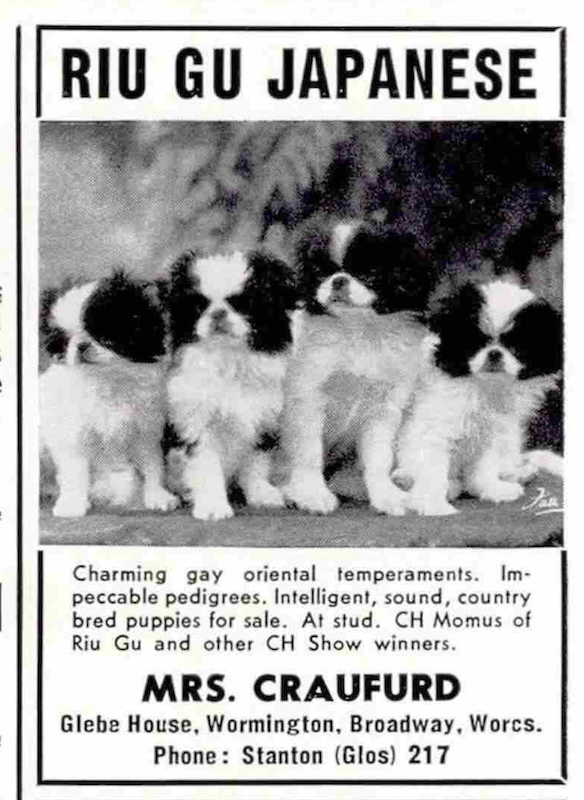
This was on the road to Dumbleton, on a beautiful day, so coming in from Broadway Mrs. Griffin and her daughter had actually driven past Glebe House. Nowadays, it is called Wormington Manor. Until the 1920s it was the Rectory, and part of Glebe Farm. It became Glebe House after the farm was sold in 1921, and was home to a series of distinguished people before it was bought in 1950 by Mrs. Eileen Craufurd, née Haig, from Scotland.
Mrs. Craufurd was a remarkable woman. She was presented to the King and Queen at Holyrood in 1911, served as a nurse in World War I, went to India, and married the Commander of the Black Watch in 1923. She became nationally and internationally known for breeding and showing dogs. Born into a well-to-do branch of the Haig whisky family, she sold her estate in Scotland in 1950 to move to Wormington to be closer to the most important of the English dog shows. The inventory of antiques, works of art, and other bits and bobs listed in the sale of her estate included valuable works of art by Leonardo Da Vinci, Poussin, Raffaelle, Canaletto and others, major furniture, and a wide range of “splendid” dog kennels. She brought fifty or more Japanese Chin or Riu Gu dogs with her, the toy breed she specialised in. She also brought their elaborate collection of toy-dog sized furniture, and had Glebe House adapted so that she and they could live in the house together. She brought a portrait of her formidable grandmother with her, and put it in pride of place above the mantle piece.
The litter-pickers explained about Glebe House and the Manor, and said “If you turn around and go past the church...” At which point Mrs. Griffin exclaimed “There’s a church!?”
Lyn Griffin came to work for Mrs Craufurd in 1970, straight from Alcester Grammar School. By then Mrs. Craufurd was in her 80s, and had been raising dogs and training and employing kennel maids for over forty years. The selections below come from an interview Mrs. Griffin generously recorded in her home in June 2024 in the company of her two poodles Bhaiti and Mr. Hands. In the clips we glimpse a part of Wormington life few will have seen, from a point of view few will have known. The selections begin at the beginning, introducing us to the people and the setting which formed Mrs. Griffins’ world as a young teenager in Wormington, and drew her back almost fifty years later to a place so changed that at first she, and her daughter, drove past it.
You can move forward among the clips on the recording following the timings given with the transcripts below. The linking music between clips comes from the Wormington dawn chorus, selected and played in sequence.
Shared here with many thanks to Mrs. Griffin
Recording:
Transcripts:
Clip 1: 00:00
Beginning work, and the small community at the Glebe House
Well, I went to work for the lady who lived at the Glebe House, Mrs. Craufurd, when I was about 16 or 17. I wanted to work with animals when I left school, and I think my mother somehow got hold of this - well - news that, that Mrs. Craufurd wanted a kennel maid. We didn't know Mrs. Craufurd at all, so I just went there and stayed there for, I think, about maybe 10 months or something, working with her dogs, which were the Riu Gu, Japanese, I think I'm pronouncing that right - Japanese Chins, they're properly called, and they're a toy breed. And I think that the kennel name means “The dragon world under the water.” That's what I seem to remember her saying it translated into English as.
*
My mother would have driven me there. Yes. My father had died by then so my mother would have taken me. I can't really remember my very first impressions, but I know my - my mother was ill. No. I’m saying - No, I'm saying she took me. She didn't take me at all. My mother was ill. She was ill in bed. And my grandmother was looking after her. And so somehow we must have conveyed this to, to Mrs. Craufurd, and she sent out the chauffeur/gardener, Mr. Thombs, to come and pick me up. And I do vaguely remember that, because he was trying to make sure that my family were all right about him taking me off to this place, and he said to me afterwards, ‘I thought I'd better assure ‘em’. You know, he thought that they might be upset at me sort of disappearing with him, because we didn't know him. And I don't remember actually arriving, but there was an older woman there who was, I suppose, about middle-aged. And so we lived in, like, the servants' quarters, as it were. And we used to watch TV together at night. And - she was actually a poodle person, which is funny, because I've got poodles now, and at the time, I wouldn't have wanted poodles at all. And I think she used to go to shows with her poodles or breed them or whatever, but she didn't have any when I knew her. And so she... You know, at least I had company there, because there are some places where you work with the owner's dogs, and you're totally on your own, usually in a nasty caravan of some sort outside. There are some rather rough places that you can work with dogs [laughs], but this wasn't one of them, thankfully.
*
Mrs. Craufurd was a very aristocratic sort of person. And we had her chauffeur slash gardener, Mr. Thombs. I'm not absolutely sure which cottage he lives at. But, yeah, he was... He was a very nice man. He was what I'd call a country man. You know what I mean? And he was just... Yeah, he always seemed a nice bloke. There was the cook, Florence. I think she was next to the house but across the road. In other words, if you walked across the lane, I think that was her house. I think they were great pals. Mrs. Hubbard was the woman that I was living and working with, so to speak. And we had the cowman, Mr. Walker, who looked after, I think it was about half a dozen Jersey cows, and we had some fabulous Jersey cream from them. He would bring in, like, a churn of milk or a container of milk and put it in the fridge. So I think I bumped into him once or twice.
Clip 2: 04:06
“I think it was nerves”. A first look at the house
But the whole thing was - when I say it's upstairs downstairs, I'm not being like, you know, derogatory about it. I'm just saying it, it was like that because you did have like the house quarters proper and then you did have like, the servants' quarters. And I mean, it must have been like that. That must have been how it worked. And presumably, if there weren't that many bedrooms in the servants' quarters, I would think that they would have people coming in from the village. I think that was quite a normal thing in these cases - was for, you know, locals to come and work at a place like that.
*
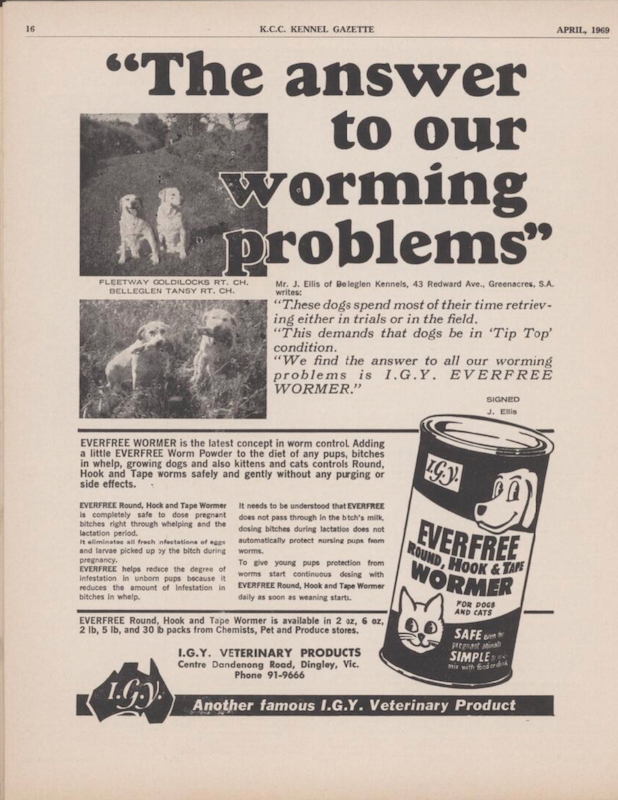 So we had Mrs Crauford's part of the house, which had several big, big rooms. I mean, it was a big house, obviously. And then we had the dividing door, and then we had the servants' quarters, where you'd got, like, a small kitchen. I don't know what they would call that. And the big kitchen, where you'd got the Aga and the, you know, all the dishes and all the rest of it. And I believe there was a, I seem to remember there was a silver coffee set with the coffee container and the hot milk container, and I'm pretty sure that I dropped the hot milk container on the floor and dented it [laughs]. Not with the milk in it, I don't think. But I think it was - I think it was nerves. I think because there was nobody there my age that I could kind of pal up with, and I'd never worked before, and I'd never lived away from home like that before. And I think I did things sometimes out of sheer - Well, like, nervousness. I was going to say ‘stupidity’ [laughing]. I think it was a bit of both. But I'm sure I dropped this milk jug on the floor, and I think I went and told Mrs Crauford. I mean, it was still usable, but I think it had a bit of a dent in it. And another thing I do remember doing - she had a litter of very young puppies at one point in her - one of the spare rooms in her part of the house - and I was told to go and give them this worming powder. I think it was the sort called Everfree. I don't know if it's still going, but it was like a yellow powder, as I remember, and you mixed it in with their food. Well, I think that I thought I'd better do a good job, so whatever it said they ought to have on the packet, I think I gave them twice as much, which gave them all violent diarrhoea. They were perfectly all right, but it made a hell of a mess because they, you know, it didn't quite agree with their stomachs, I don't think, because there's too much of it. Oh, and I also - there was a high up cupboard, which was probably only just within my reach, because I'm only five foot tall, and I was trying to slide the glass doors to reach some, some - I don't know what it was, crockery or mugs or something inside it one day, and the glass door just stuck. And so I eventually gave it a good push, which sent it shooting across the front of the cupboard and smashed the glass door. And I, you know, I think, the cook said, you know, ‘You must go and tell Mrs Crauford’. So I did, and I was very nervous because she was deaf and she couldn't always hear you, even with a hearing aid. And I said, ‘Mrs Crauford, I'm very sorry, but I've broken - ‘. And when I got to that stage, I saw her face fall in horror. And I thought, oh, God, you know, she's going to be really annoyed. And I said, ‘I've broken one of the glass doors in the kitchen’. And her face lit up like, you know, everything was wonderful. And she said, ‘I thought you were going to say you'd broken one of the dog's legs’. And she said, ‘so long as the dogs are all right she didn't care about the cupboard at all’, which I can't imagine that she would. Yeah, I think there may have been other things that I did [laughing], did when I was there that I probably wouldn't do now. But I think it was just nerves, so it was, it was just nerves and just not being used to being in that situation and being a bit, well, a bit brainless at times, I think, yeah.
*
But this hearing aid used to occasionally whistle, and it was exactly the sort of thing that would set me off into hysterical laughter, so I dreaded, I absolutely dreaded it, and I thought “Please don't let it start whistling”, you know [laughing].
Clip 3: 08:43
Kennel maids, and servants quarters. Living away from home
The only two people living in that side were me and Mrs. Hubbard, and we were the two that looked after the dogs. She was middle-aged, whatever that meant. She hadn't got any dogs with her. I had a Jack Russell that I took with me to the house. I think she thought I was, I don't know what word to use. Doolally is the phrase. I think she thought I was a bit daft, that I, you know - and again, I think some of this was just down to nerves, and I sometimes used to have terrific giggling fits about things that I don't think she would have found amusing at all, but I did. And again, I think that was just, a lot of it was nerves. I liked her, and we got on all right, but obviously we weren't at all the same age, so we didn't have any kind of social life or anything. But yeah, I liked her okay. But unfortunately, during the time I was there, she left. And I can't remember why she left. I mean, it wasn't because of me - I don't know why she left when I think about it - and we got this other woman who was called Yvonne, who was a lot younger, more my age, and I'm afraid I didn't like her at all, and I didn't find her friendly. Whereas Mrs Hubbard and I used to go and sit, like I say, and watch TV in the servants’ quarters, this Yvonne used to take herself off to her room once we finished work, and I wouldn't see her again. She had a lot of those little Papillons, about six of them. So we just, I don't mean that we had rows or anything like that, but I just couldn't relate to her, and I didn't find her very friendly. But we just didn't get on, I don't think. The only thing I did like about her was she used to seem every night to play Moon River, which I could hear coming through her bedroom window, and I was particularly - Andy Williams it was - and I loved that song. Whether it meant something specific to her - presumably it did - but I never asked her [laughs]
*
What were the bedrooms like? I don't know if I knew what the other one was like; I don't think I ever went to have a look - but mine was just a normal room. I mean it wasn't particularly small, but it wasn't massive. But we had a sort of - I think there was a wardrobe. I'm sure there was a chest of drawers and obviously a bed. So it was like, you know, sort of simple furnishings. But I mean it wasn't awful in any way. I mean the whole place was you know nice to live in sort of thing. It was just, yeah, with a window and a view over the kitchen garden, so yeah, it was it was nice.
11:26: Clip 4
A dog’s life, on the posh side of the house
Mrs Craufurd's dogs were all in the posh side, as it were, of the house. So I mean we had a - well, not a staircase, it was just a flight of stairs, I think, to go up to where we had our bedrooms, and sitting room; and she had a much more elaborate set of stairs that went up to where she had her bedroom. I don't know how many bedrooms there were in her side of the house, because I don't think that I ever looked, because I mean we had no, no business to. I imagine there were at least two. But she had one room, a downstairs room, which let on to the garden. And that was where the dogs were that were - I don't know a polite way of putting this - I was going to say ‘second rate’, the ones that were not suitable for show or breeding and they were too big for their breed, so I think some of these were, like, dogs that - you know, may have been - I don't know whether she ever bred from them or what, I don't know all the history of them breeding-wise - but they were bigger dogs. People would not have walked up to them and said “Oh this is a typical Japanese”, because they wouldn't have been. So they - I was trying to think how many of them there were and I don't actually know. There were quite a few. They were perfectly nice friendly dogs. So, they were left to come and go as they pleased into the garden like all day long, and then the door was shut at night. But in Mrs. Craufurd's part of the house where she would live, like her sitting room and so on, were the smaller dogs, some of whom were show dogs or potential show dogs; and the others weren't, but they were still small dogs. So there were one or two - I think there was a, you know, maybe half a dozen of them that were the kind of the pet circle, so to speak, and then there were others that - and I mean some of these she, she did use for breeding from, but I only remember her having one litter that she bred while I was there. I mean she certainly did not breed for, you know, commercial reasons, to sell loads of puppies. Not at all. The litter I remember her breeding was because she thought that the one dog was a - well he, he - this is a bit complicated. He was a show dog, or he could have been a show dog, and he was a very pretty dog. The only problem was he had a boyfriend, and he hung out with this boyfriend all the time, and he had no interest in the ladies shall we say. The boyfriend was a horri- [laughing] horribly ugly little thing whose tongue used to stick out like, like this, and his eyes used to [laugh] - Zen his name was. I particularly liked Zen because I thought he was comic, but the point was these two dogs hung about together all the time. They were really, you know, attached to each other. And Mrs. Craufurd wanted to breed from the good looking dog, so the only way she could go about it, because he wasn’t going to get together with a bitch, because he had no interest in bitches at all. So she must have asked her vet, and he said that he could give the dog - I don't know if it's like a hormone injection or what it was - but it was something that would enable him to breed with a bitch, and for Mrs. Craufurd to have this litter of puppies which - it did work, I mean this did happen. So, [laughing] it just happened to be a really good dog that - I bet she cursed this dog, because you know he couldn't help it, but like if it had been any of the other dogs it wouldn't have mattered, but the one dog that she wanted to breed from was not interested until he had this injection.
*
 Mrs Craufurd used to go - Come and go, go through what I called the dog room, which was the dogs that were not suitable for breeding, then, with her pet dogs; and they used to all walk through and go around the garden. So I don't know whether this was once a day, twice a day, I can't remember. But we used to laugh because sometimes somebody would say, “I thought Mrs Craufurd was in her sitting room, but I've been to see and she's not”, and somebody would say, “She'll have gone out the window.” [Laughs] And she did. I don't mean it wasn't a window that you climbed through, obviously, it was like a low window ledge, like down here, and the windows opened, and Mrs Craufurd, who was quite an age, I'm sure, at that time, would like get over this window ledge and go trotting off around the garden. I mean, why she did this sometimes, I don't know. I think possibly she, she wasn’t, she didn't want all the dogs to go with her. So I think she just sometimes took the pet ones for like a special roam around the garden.
*
So there was this room we called the dog room that let onto the garden, I think we, you know - as far as I know, we swept, and that was a big room. We swept the room, I think, every day, quickly. And then I think we may have mopped it. I don't know if we mopped it every single day or if we mopped it once a week or something, because it wasn't dirty. I mean, the dogs didn't, like, use it for a loo. But in the house, the dogs that were in Mrs Craufurd's part of the house, as it were - I mean, that was carpet, that I do not remember personally hoovering. So whether the cook-housekeeper did the hoovering, I can't remember. I mean, I do think that the dogs did cock their legs, some of them, in Mrs Craufurd's part. I think some of the male dogs would just go. Because I think she had furniture that I think would have been extremely costly - you know, when you have all this, like, this carved wooden type stuff. And I think that the male - there weren't many male dogs, I think there were two or three or four in her part. But yeah, I'm sure they went and, and cocked their legs up the, the wooden... I don't think we took any notice. I mean - Well, I don't think we knew that they'd done it, particularly, because it wasn't obvious to see it. But when this Yvonne came, the one that I didn't like, I think she was appalled, like, at the way the place was. I don't know why. I mean, I wouldn't have said it was dirty, you know. And she said to the, the cook, like, “I”, you know, “I don't think it's been done properly” or something. And the cook said something like, “Oh, no, I don't think it has.” So Yvonne, I remember, got a - she got a bucket of, like, water and disinfectant and a pair of rubber gloves and went round, like, wiping all these, these bits of furniture where the dogs had peed on the bottom. I'd forgotten about this, you know. And I thought, “how pathetic”, I thought. [Laughing] I mean, I can't remember that the house smelt of dog pee or anything. I seriously can't. And I should have thought I would have noticed if it did because I never smoked or anything in those days. And I don't remember it being unpleasant. And I thought, “No, no need for that.” [Laughs] Apart from the fact that they sometimes did pee, I don't remember ever thinking that the place was filthy at all. And we did, of course, groom the dogs. But we used to particularly groom the dogs in, like, the dog room because nobody else - you know, Mrs Craufurd didn't really take any notice of them.
Clip 5: 18:57
Through the door to the other half, a special room for dogs in heat, and a tragedy
When you came through the door from, you know, the posh half, there was a long corridor which I think was like red tiles, those tiles that you used to - probably still do see. And at the end there was the - What was it called, the larder? Or what? - I know there was a big fridge in there where, this is where the dairy cream went. Then there was a room which we referred to as ‘the bitches room’, which was just like an empty room and the purpose of it was for bitches in season, because Mrs Crauford had male dogs, a few male dogs as well, so if a bitch came in season obviously she didn't want all the bitches to be having puppies left right and centre, so the bitch in season would go into this bitches room and she - When I started, though, she would have a dog, another bitch put with her just for company so that she wasn't totally on her own, and you could end up with like half a dozen of them there at the same time. And there is a nasty story about that I don’t know if you want to hear it, because I wasn't there when it happened and I didn't know. I was told afterwards. This girl Yvonne that I wasn't keen on had one of her papillon bitches come in season, so she put the papillon bitch in what we called the bitches garden, which was just a sort of grassed area with high walls to keep them away from, from any male dogs. And she put her papillon bitch in there with I think half a dozen of the Japanese bitches. And I think I must have gone home, like, for my time off when this happened because I certainly didn't know about it till afterwards. And I was in the kitchen and the cook said to Yvonne something like “I wish I could - I'm sorry for your trouble” or “I wish I could lighten your load” - something like that. And I thought ‘Whatever does she mean?’ So when she'd gone out of the kitchen Yvonne turned to me and said “I put the papillon - my papillon bitch in with the Japanese, in the bitches garden and I thought she, you know, they seem to be getting on all right.” Apparently she went back and the Japanese had killed her papillon bitch. I never knew any of the Japanese to be aggressive. I can only assume this was because they knew that the papillon was not part of their, you know, family. And so she shouldn't have been in there and so something must have happened, and they must have attacked her and apparently they killed her, which was absolutely awful. But I - like I say, when I was that age I could not have come out with a, an appropriate response, and I didn't. I went - the bitch was called Fleta, and she said “The Japanese have killed Fleta” and I went “Fleta?!” and I just I didn't I couldn't say anymore because I was absolutely stunned and horrified, but I had no idea how to, to talk to her about it at all, you know, I just didn't. So obviously she was very upset at that, understandably. I'm not saying you should put that in any records because you know, it might reflect badly on Mrs. Crauford's dogs and I don't think it should because those things can happen with dogs if they're - one lot are part of one family, so to speak, and another lot aren’t, I mean, strange things can happen that you don't expect.
Clip 6: 22:23
Meat cutting day; where did you eat meals; and Mrs. C
And the other thing was that Mrs Hubbard and I had this - this raw meat got delivered from the butchers, I think it was once a week. And this was for the special dogs, the ones that had little deformed mouths and so forth. And it was like their special treat that they had this, this raw meat. But - it would come in chunks like this [fingers show two or three inches]. And, of course, you had to cut it up. So Mrs Hubbard said to me, like, “Oh, we have Tuesday is like meat cutting day” or something. And I said, well, what do you mean, like, ‘meat cutting’? Because the dogs also had what I call normal dog food in a sack that's like a meal, you know, that you usually put hot water on it and you just shovel it out. And it's like ready meal for dogs, as it were. So Mrs Hubbard said, like, “Well, the meat comes in chunks that are too big for the little dogs to eat. And they're like for Mrs Craufurd's special dogs. So we have to cut it up.” So I said, “OK, fine.” So we used to sit across the, the table in the kitchen once a week, with a pair of kitchen scissors. It wasn't an unpleasant job at all, I mean, not even for me, and I didn't eat meat. But it wasn't like, you weren’t, you know, swimming in blood or anything like that. It's just like you would see raw meat in a butcher's. So we'd sit either side of this table and we'd cut this meat into edible chunks. I don't know if we had the radio on or whatever, or we were just talking, I think. So this was what happened. And this was called, like, ‘meat cutting day’. So you wouldn't, unless it was an emergency, have said, “Oh, can I change my day off?” because you'd leave the other person cutting all this meat. So when this wretch Yvonne arrived, I said, “Oh, don’t, don’t have a day off,” or something, “don't ask for a day off on the Tuesday”, or whatever it was, “because it's meat cutting day.” And she said, “What do you mean?” And I said, “Well, this meat gets delivered, like, in, in raw chunks, and we have to cut it up.” And she's like, “So what?” So I said, “Well, we don't have days off on that day because we have to cut this meat.” And she said, like, “Oh, we could cut it the next day or something, like, I'm not having my, my time off ruled by cutting bits of meat up.” And I thought, “OK, I see. Like, that is it.” You know? And I mean, I quite enjoyed cutting the meat up with Mrs. Hubbard because it was like a relaxing job. You'd just sit there and cut the meat up and talk. But oh no, Yvonne wasn’t having any of it. It was like, “Oh, you can cut this meat up in half an hour and that's it.” And I thought, “OK, right.” But I didn't like her. I don't remember thinking that she had any sense of humour at all.
*
Where did we have our meals? Well, if we ate with, with Mrs. C we, we had like a - you know - a dining table in, in her part of the... For the life of me, I don't know that we had breakfast with her, or possibly she didn't have breakfast, I don't know. But I know I used to get into this Jersey cream on the cornflakes. I can only think that we possibly had lunch with her? Because in the evening, I'm sure she just had something like a bowl of soup and a bit of bread. And I think I usually had to take that, that in to her. So I wasn’t - I mean, the thing was, I’d got nowhere to go. So it wasn't a question of, “Oh, well, I want the evening off”, because, you know - well, you obviously know what the place is like. If you don't have transport, I mean, you can't really get out of there. So, I think I went home once a week, like with my mother collecting me.
*
Because we did have - I don't remember we had breakfast with Mrs. Craufurd - we, we didn't have the evening meal. I can't remember whether we ate with her at lunchtime. But she was very quiet and, like I say, very aristocratic, so there wasn't a lot of conversation going on.
Clip 7: 26:13
“Would Florence have cooked meals for you guys, apart from Mrs Craufurd?”
So, that's weird. I just, I cannot remember. I know we used to have cereal, like, and probably toast, first, first thing, like, for breakfast. Ah. I think we did, yeah, I think we had - Was it lunch we had that she cooked? Because there was something that I absolutely didn't like, and I can't think what it was now. I can't think what it - oh, it was something that I don't think I'd ever heard of before. I know what it was. It wasn't that I didn't like it. It was that I think I'd never had it before, and I couldn't really see the point of it, because it was so lightweight. And I think it was fools. Do you know people talk about, like, gooseberry fool? And I think the reason I wasn't keen on it - I ate it, I think, but I thought that it wasn't substantial enough. You know, it's just like a frothy thing, of dessert. And I don't think I'd ever heard of them before, because at home we would have, like, you know, apple pie or something substantial and Northern. We wouldn't have, we wouldn’t have had fools. So [laughs] - I think she was a very good cook. And as I say, I imagine the ingredients for most of the stuff would have come from the kitchen garden, because it was quite a big garden.
*
And how she coped with my diet, I don't know, because I was vegetarian. I don't know where that started. I think when I was, like, a younger teenager, I got into what would now be called animal rights, but it was like - It was animal rights, but it was, like, anti-vivisection and that kind of thing. But they - these four societies had a kind of junior branch, which was what I joined, for younger people. And, of course, having joined this and, you know, reading all the literature from the parent branches and so on, I found things out which I did not like about, you know, animals, how they were kept and they were slaughtered and all the rest of it, and that was it. It's like, “No”. My mother, thankfully, was always very tolerant about, you know, most things. And I think I just said, I think they put out the food one day - this is at home, I'm talking now - and I think I just said, “I don’t want to any, I don't want to eat the meat.” And my grandmother said - I remember this because it was typical of my grandmother - she said [laughs] “You will waste away.” Well, as you can see, I haven't wasted away yet [laughing]. I think she, I think my grandmother was full of, you know, old ideas, and I think she genuinely thought that if you didn't eat meat, you would, you would waste away or you would become ill or both, you know. And I think my mother knew better. And the best, the best thing was, my mother had had a great friend at college and she was vegetarian. So I think that, to mother, being vegetarian was OK. You know, it was like something people did. So, yeah, I think I was - I don't know how old I was. I was about 16 then when I went vegetarian. But, yeah, I mean, I ate all right when I was at Mrs Craufurd's. You couldn't stop me, I think. Any leftovers, I'd be going running to the larder for them.
*
The man, Mr. Thombs as I said was the gardener, he would have dealt with the kitchen garden and I assume that a lot of the vegetables we had would have come directly from the kitchen garden. I mean I don't think I took much notice at the time. I think my main favourite thing was the Jersey cream which we had on cornflakes for breakfast. Oh it was fabulous. And there is a story about that, which is that Mrs. Hubbard, the older woman that I originally lived there with, her - it's either a son and daughter-in-law or daughter and son-in-law, I think it's the daughter and son-in-law, came to see her one day and, and Mrs Hubbard said to me afterwards - this was another thing I did, I mean I don't think I did anything really harmful, but I did things that were daft or that I shouldn't really have done by rights - she said, “I said to them ‘Oh! [laughing] You must come and see the, the Jersey cream in the larder’ ”, or whatever we called the room. Well she opened the fridge only to find that most of the Jersey cream had mysteriously vanished [laughing], because I had had it. I was absolutely mad about it, and I used to have it at every opportunity. So - I didn't know she was going to show it to them, did I! So, yes. [Laughs]
Clip 8: 31:05
Visitors
Mrs. Craufurd was very quiet, like if she was with us, I don't think she’d have, you know, we'd have had a lot of conversation with her. But when Mr. Haig and family came, it seemed to be a bit different with all this, these peals of raucous laughter. And I think some of that was Mrs. Craufurd. It wasn't all him laughing, because you could hear her. [laughing] You couldn't hear what they were saying, but I could hear her sometimes laughing. So I think, I think this is when she came to life, like when the Haigs came over, because - I don't know where they came from - because the rest of the time, she was on her own, you know. And how she felt about that, I don't know. I mean, I don't think she had any choice. But she did know some of the show people. And they sometimes came over to her - I think it was only occasional, or she would see them at the show. So she did have contact with, with the Japanese people, so to speak. But other than that, I can't remember... Ah. I do remember some young man. Ah, yes. No, those were show people. There was a woman called Pamela Crossburn, who was into Japanese. And I don't remember the man's name. There was a young man - Pamela Crossburn was very - What's the word I'm looking for? Very smart looking. She had long hair, and I think she always had it, like, piled on her head, and, you know. I don't remember his name. I think he was a good-looking young man. And they must have come to talk to her about the dogs, or about breeding them, or showing them, or, you know, getting tips off her, or talking about the breed in general. But other than that, I mean, I don't remember her having many visitors. I think she was mostly on her own. And perhaps she just didn't mind that. Perhaps she was used to it. Because how long her husband had been around or how long they'd been married or anything like that, I just don't know. Because, you know, it's not something I would ever have found out, I suppose. But as I said to you, Mr Haig had this terrific laugh. And so if we were in the kitchen, in our, you know, servants' kitchen, which was perfectly, it was a nice place. I mean, if you wanted to sit and chat, this kitchen was lovely, and it was, you know, it was tiled and it was all posh and whatever. You could hear them laughing in, in Mrs Craufurd's side. But I mean, you couldn't have heard what they were saying, possibly just as well. But as I say, Mr Haig had this - I was told they were, or he was, a member of the whisky family. And he came with his wife, whose name I'm afraid I can't remember. And I think the son was called David. I may be wrong or right. I don't know about that. And I can't remember what his first name was, if I knew. But it used to set me off laughing because you'd hear these peals of laughter coming through. And Mrs Hubbard, the older woman that I originally worked for, would say to me, like, “I think they're getting into the wine now, dear”, or something. And I thought, yes, I suspect they are. But he would come out - I was supposed to hang around and go and fetch the plates and wash them. And he would actually, Mr Haig would actually bring the plates through to the kitchen, and stand there washing up. And he was a lovely man. He really was. And he was jolly. I mean, that may have been partly the effect of the alcohol, I don't know, but I mean, he seemed to be a jolly sort of person. And I think I had a massive crush on him, actually. [Laughs]. Yeah. ‘Cause like I say, I was very young then.
Clip 9: 34:55
“We certainly didn’t”. Did Mrs. Craufurd go to church? Coming to an end, and the world beyond.
As far as I know Mrs Craufurd never went [to church], at least I certainly don't remember her going, not to my knowledge. No, I don’t, like I say, I don’t think I was, I'm sure I wasn't aware there was a church there at all. I mean if somebody said to me, you know, I'll drive you to Wormington now, go and find the church, I don't know where it is. I did used to walk up and down the road simply to exercise my Jack Russell and I used to walk in the fields like behind Mrs Craufurd's. There was at least one field behind the house which was just pasture and this is where the Jersey cows would be out grazing. But I said, after we saw part of the place the other day, not through like the main gate but before that, and I said it appeared to me to look like garages. It only occurred to me afterwards, could they have been something to do with the cows, like cow sheds, and could they now be garages? And the answer is I don't know. Because I'm sure Jersey cows would not stay out in the winter because they're like a, a rather aristocratic sort of thinner skinned breed as far as I know. So I don't, well I mean even other cows don't stay out in the winter I don't think. I mean I used to live on a farm for my sins. I was married to the herdsman who looked after the cows and during the winter all the cows came in from the fields and were all like in yards and like barns or whatever you'd call them. So they weren't out and they were Friesians. So I mean if the Friesians weren't out in the winter I'm sure Jersey cows wouldn't have been.
*
I don't remember seeing anybody. I mean I think there was probably very little traffic and when I walked up and down the road I can't say I ever remember seeing anybody. So I mean it was a kind of isolated place to be, especially as like there was only one other person like working with the dogs. You know it wasn't like you had half a dozen people working there. And I think I just wanted to move on. I just wanted to go and find out what it was like elsewhere and work with different breeds of dogs. And so I went from one extreme to the other, like from a very posh place with small dogs to a house with the German Shepherds where you couldn't move for them kind of thing. You literally opened the door and like swum through this sea of German Shepherds.
*
It's quite nice to remember some of this stuff because I'd forgotten about it really. Because I mean you do over the years. And I mean after I worked for Mrs Craufurd I worked for, you know, umpteen other people and lived in various different places. And so you know this was just the start of my career with dogs as you might say.
Clip 10. 37:46
Bonus material. (Mrs. Craufurd died in January 1976, at the age of 88, not many years after Mrs. Griffin worked for her)
But I don't remember her being like unhealthy in any way. I mean, in spite of the fact that she certainly wasn't young. But, you know, she used to get about. And I was thinking to myself the other day, well, like, did she go up and down the stairs on her own? And I thought, well, she must have done. Because as far as I know, nobody went and took her upstairs, like, to go to bed. I think she, you know - I think somebody, I don't know who, may have put a hot water bottle in her bed, like. I think I did sometimes. I think you were told, like, “When it gets to so and so o'clock, like, put a, go and put a hot water bottle in her bed to heat it up for her.” But I'm sure that we never helped her up the stairs or anything like that, I think she was perfectly able, you know.